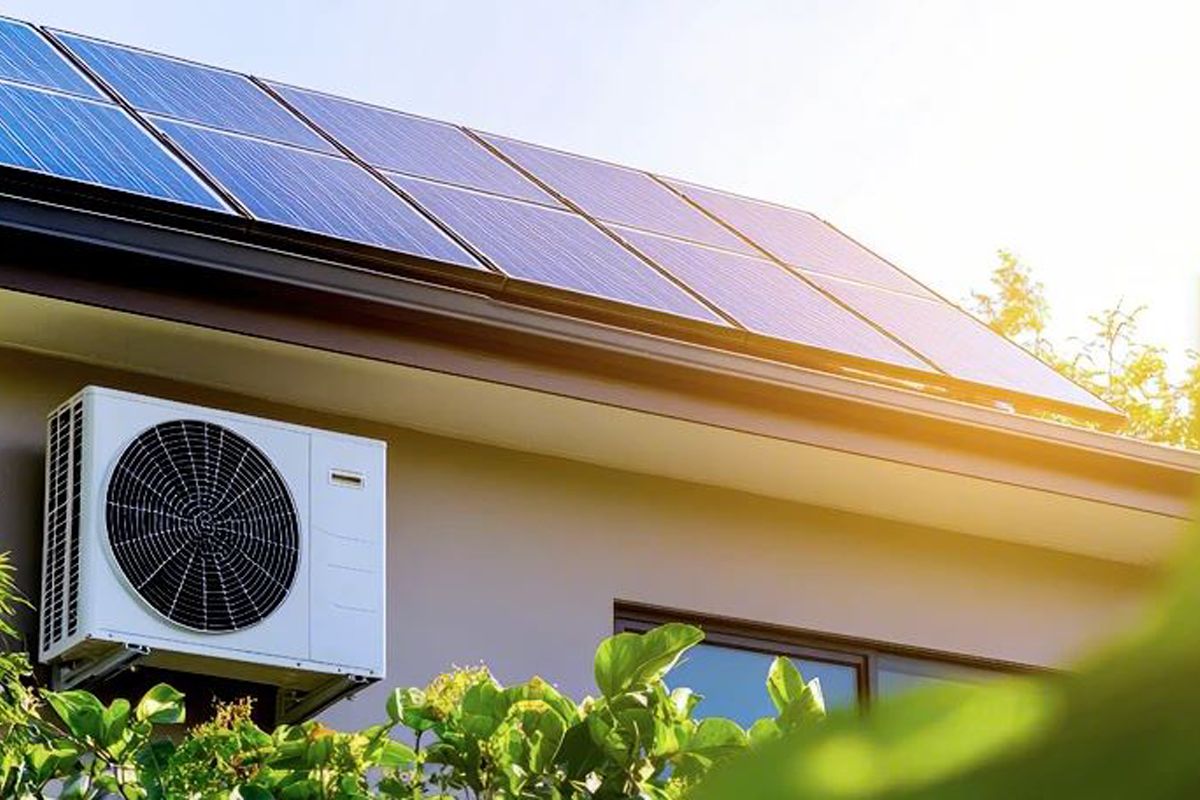
Solar Panels & Heat Pumps represent the ultimate power couple in the quest for residential energy independence in 2026. As we navigate a world where energy prices feel more like a roller coaster than a utility bill, the average homeowner—particularly those living in the ubiquitous semi-detached houses that line our suburban streets—is faced with a critical question: is the massive upfront investment truly worth the long-term payoff? We’ve moved past the era of “early adopters” and “green enthusiasts.” Today, installing these systems is a calculated financial move, a “hedge” against inflation, and a significant upgrade to the most valuable asset most of us own: our home.
The year 2026 has brought us to a fascinating crossroads. Technology has matured, the supply chain for high-efficiency N-type solar cells has stabilized, and the “Air Source Heat Pump” (ASHP) has finally shed its reputation for being a noisy, lukewarm alternative to the trusty gas boiler. However, the “brutal truth” remains that turning your home into a mini-power plant isn’t as simple as clicking “buy now” on a website. It requires a deep dive into thermodynamics, roof orientation, and the unglamorous world of loft insulation. If you’ve been staring at your neighbor’s roof and wondering if they’re geniuses or just have too much disposable income, this guide is for you.
The Financial Reality of Solar Panels & Heat Pumps: Sticker Shock vs. 2026 ROI
When we talk about Solar Panels & Heat Pumps, the first hurdle is always the cost. Let’s be honest: writing a check for a full system can feel like buying a mid-sized SUV and parking it on your roof and in your garden. In 2026, a high-quality 4kW to 6kW solar array combined with a modern battery storage system and an 8kW air-source heat pump will likely set you back between $15,000 and $22,000, depending on your region and the complexity of the installation.
However, the Return on Investment (ROI) has changed dramatically. A few years ago, the “payback period” was a discouraging 12 to 15 years. Today, thanks to higher efficiency ratings and the skyrocketing cost of fossil fuels, that window has shrunk to 6 to 9 years. For a semi-detached home, which typically has a moderate heating demand and a decent amount of roof space, the math starts to look very attractive. You aren’t just “spending” money; you are “pre-paying” for 25 years of energy at a fixed, much lower rate.
Furthermore, we must consider the “Opportunity Cost.” In 2026, homes with a high Energy Performance Certificate (EPC) rating or equivalent green certifications are selling for a 5% to 10% premium. Buyers are increasingly savvy; they don’t want to inherit a gas-guzzling boiler and a drafty house. They want a home that is “future-proofed.” Therefore, a significant portion of your investment is immediately recaptured in the increased equity of your property.
The Technical Synergy: How Solar Panels & Heat Pumps Work Together
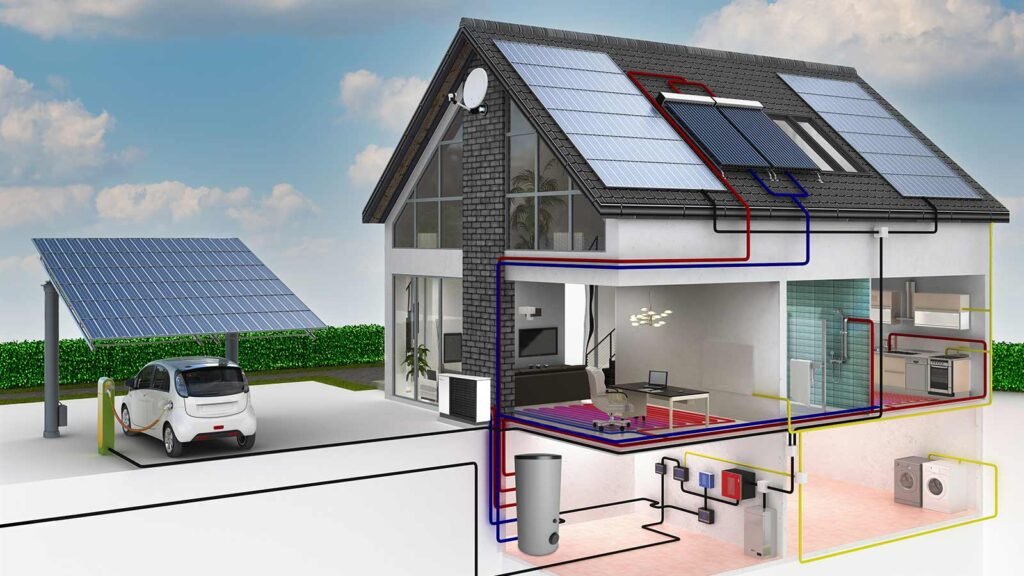
The secret sauce of this transition is the synergy between Solar Panels & Heat Pumps. If you install a heat pump alone, your electricity bill will spike because you’re moving your heating load from gas to the grid. If you install solar panels alone, you often have a surplus of energy during the day when you aren’t home to use it. But when you marry the two, magic happens.
A heat pump is essentially a “reverse refrigerator.” It takes low-grade heat from the outside air (even when it’s freezing) and concentrates it to warm your home. It’s incredibly efficient, often delivering 3 to 4 units of heat for every 1 unit of electricity it consumes. Now, imagine if that 1 unit of electricity is “free” because it was generated by the panels on your roof. This is the “closed-loop” dream.
In 2026, smart home energy management systems (HEMS) have become the brain of this operation. These AI-driven controllers look at the weather forecast, see that a sunny day is coming, and tell your heat pump to “pre-heat” your hot water tank and floors while the sun is shining. This “thermal storage” allows you to bank the sun’s energy in the form of heat, reducing the need to draw expensive power from the grid during the evening peak.
Impact on the Average Semi-Detached: Solar Panels & Heat Pumps in Practice
The “Semi-Detached” house is the hero of this story, but it comes with unique challenges for Solar Panels & Heat Pumps. Unlike a detached house with 360-degree roof access, a semi-detached usually has two main roof slopes. If your primary slope faces North, your solar potential drops significantly. However, 2026 technology, specifically “Bifacial” panels and micro-inverters, has made even sub-optimal roofs viable by harvesting ambient light and managing shade from shared chimney stacks more effectively.
Space is another consideration. An air-source heat pump requires an outdoor unit. In a semi-detached setup, you have to be mindful of the “boundary line” and your neighbor’s ears. Fortunately, the 2026 generation of heat pumps is whisper-quiet, often producing less noise than a modern dishwasher. Still, placement is key. You need enough airflow for the pump to work efficiently, which usually means a clear spot in the back or side garden.
Then there is the “Fabric First” rule. A heat pump is a marathon runner, not a sprinter. It likes to provide a steady, low heat. If your semi-detached house has original 1950s windows and a loft that’s a “breeze-way,” the heat pump will struggle, and your bills will stay high. Before investing in the tech, you must invest in the “envelope.” Double (or triple) glazing and high-quality insulation are the prerequisites for making the solar-heat pump combo truly worth the investment.
Maintenance and Longevity: Are Solar Panels & Heat Pumps Set-and-Forget?
One of the biggest myths about Solar Panels & Heat Pumps is that they are high-maintenance headaches. In reality, they are surprisingly “low-drama.” Solar panels have no moving parts. Aside from a quick rinse if you live in a particularly dusty or bird-heavy area, they generally sit there and do their job for 25 to 30 years. The inverter—the box that converts the DC power to AC—might need replacing once after 12 to 15 years, but that’s a relatively minor cost.
Heat pumps are similarly robust. Think of them as being as reliable as your fridge. With a basic annual check-up to ensure the filters are clean and the refrigerant levels are correct, a quality heat pump should last 15 to 20 years. This is significantly longer than the average life expectancy of a modern condensing gas boiler, which often starts complaining after its 10th birthday.
The 2026 landscape also offers “Remote Monitoring.” Most installers now provide a dashboard where they can see if your system is underperforming before you even notice. This proactive maintenance ensures that you are always getting the maximum “yield” from your investment. You aren’t just buying hardware; you’re buying a 20-year energy service.
Government Incentives and the 2026 ROI for Solar Panels & Heat Pumps

The policy environment in 2026 is heavily skewed in favor of Solar Panels & Heat Pumps. Governments worldwide have realized that upgrading the residential building stock is the only way to meet climate targets. This has resulted in a “carrot and stick” approach. The “stick” is the rising carbon tax on natural gas; the “carrot” is a suite of grants, interest-free loans, and “Smart Export Guarantees.”
In many regions, you can now sell your excess solar energy back to the grid at rates that make sense. It’s no longer a pittance; it’s a genuine revenue stream. Some homeowners are finding that their solar panels pay for their heat pump’s winter electricity usage entirely through the credits earned during the summer months.
Additionally, “Green Mortgages” have become standard. Banks are offering lower interest rates to homeowners who use the loan to install energy-saving measures. If you are re-mortgaging your semi-detached home in 2026, the savings on your interest rate alone might cover a significant chunk of the monthly payment for the solar and heat pump installation.
The Human Element: Lifestyle Changes with Solar Panels & Heat Pumps
Beyond the spreadsheets and the carbon footprints, Solar Panels & Heat Pumps change how you live in your home. There is a psychological shift that occurs when you become an energy producer. You start to notice the rhythm of the day. You find yourself running the dishwasher at 11:00 AM because the sun is out, or checking your app to see how much “free” hot water you’ve generated.
It also changes the “feel” of a home. Heat pumps provide a consistent, gentle warmth. Gone are the days of the “radiator ping” and the cycle of feeling freezing cold, turning the heat to max, and then feeling stifled. A heat pump-equipped semi-detached feels “solidly” warm. It’s a subtle luxury that’s hard to quantify but easy to appreciate on a rainy Tuesday in November.
However, there is a learning curve. You can’t treat a heat pump like a gas boiler. You can’t turn it off all day and expect it to heat the house in 20 minutes when you get home. It’s about “low and slow.” This adjustment in mindset is perhaps the biggest hurdle for the “average” homeowner, but once you make the switch, going back to the aggressive, “on-off” nature of gas heating feels archaic.
The Verdict: Is It Worth It for Your Semi-Detached?
So, we come to the final tally. Are Solar Panels & Heat Pumps worth it for the average semi-detached in 2026?
If you plan on living in your home for more than 5 to 7 years, the answer is a resounding yes. The combination of reduced monthly outgoings, protection from energy market volatility, and the significant boost to your property’s resale value creates a financial “no-brainer.” When you add the comfort of a perfectly heated home and the satisfaction of reducing your carbon footprint by up to 80%, the “value” extends far beyond the bank balance.
However, if you are planning to move in the next 24 months, or if your house is so poorly insulated that you’re effectively “heating the street,” you should pause. Fix the insulation first. Research your local grants. Look at your roof. The tech is ready, the economics are solid, and the future is electric. Your semi-detached house isn’t just a place to sleep; it’s your very own power station waiting to be switched on.
About the Author