

Seasonal Affective Disorder is far more than just a catchy clinical label for the collective urge to hibernate when the Canadian tundra turns into a monochromatic landscape of white and grey. As the “Great White North” prepares for its annual descent into shortened days and sub-zero temperatures, millions of people find themselves grappling with a profound shift in their internal chemistry. This isn’t just a simple case of the “winter blues” or a temporary bout of grumpiness because your car wouldn’t start at 6:00 AM.
It is a complex, biologically driven condition that fundamentally alters how we think, feel, and interact with the world around us. In a country where winter isn’t just a season but a state of being for nearly half the year, understanding how to navigate this psychological frost is essential for survival.
The Biological Mechanics of Seasonal Affective Disorder
To truly combat Seasonal Affective Disorder, we must first understand that it is a physiological response to the environment, not a personal failing or a lack of “mental toughness.” At the heart of the issue is our relationship with light. Human beings are, in many ways, solar-powered. Our internal biological clock, or circadian rhythm, is synchronized by the blue light of the sun. In the Northern latitudes, the drastic reduction in photoperiod—the interval of daily light exposure—wreaks havoc on our endocrine system.
Two primary chemicals are responsible for this shift: Serotonin and Melatonin. Serotonin, often dubbed the “feel-good” neurotransmitter, drops significantly when sunlight is scarce, leading to feelings of lethargy and depression. Conversely, the brain begins to overproduce Melatonin, the hormone responsible for sleep. When the sun sets at 4:30 PM, your brain begins a premature “shutdown” sequence, leaving you feeling exhausted by dinner time. Furthermore, the disruption of our circadian rhythms can be modeled by the relationship between light intensity (I) and the phase shift of our biological clock, where:
Δϕ∝∫I(t)dt
Essentially, the less light we receive over time (t), the more our internal phase (ϕ) shifts away from our social and professional schedules, creating a state of perpetual “biological jet lag.”
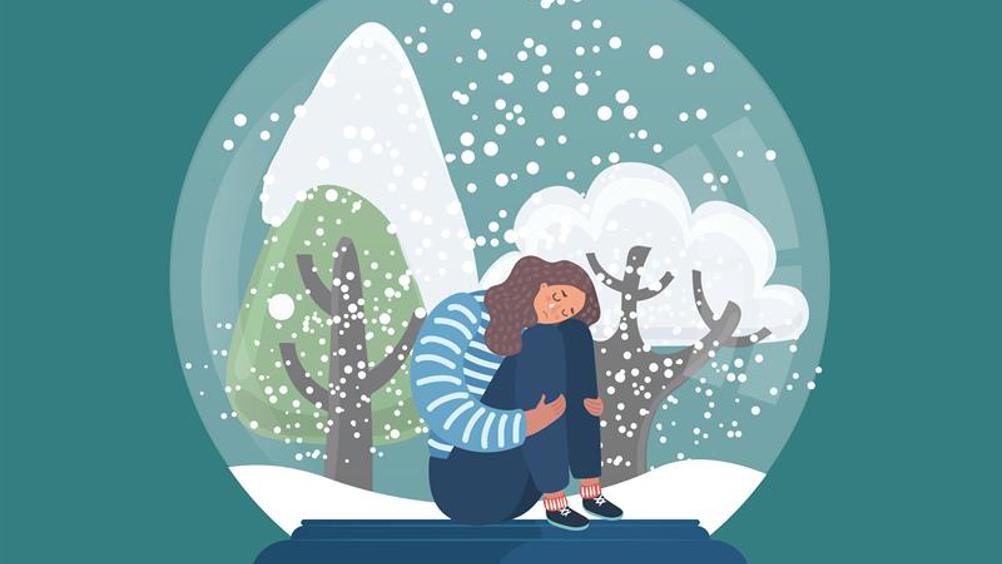
Recognizing the Specific Symptoms of Seasonal Affective Disorder
While many people feel a bit more tired during the winter, Seasonal Affective Disorder presents a specific cluster of symptoms that distinguish it from standard depression. In the Great White North, these symptoms often manifest in ways that are uniquely adapted to our environment—often referred to as “The Hibernation Response.”
- Hypersomnia: Unlike typical depression, which can sometimes cause insomnia, those with this disorder often find themselves sleeping ten or twelve hours a day and still waking up unrefreshed.
- Carbohydrate Craving: There is a distinct biological drive to consume heavy, starch-laden foods. This is your body’s attempt to rapidly boost serotonin levels, but it often leads to the “winter weight gain” that further depresses mood.
- Social Withdrawal: The desire to “cancel all plans” becomes overwhelming. The effort required to put on four layers of clothing to go out in the cold feels insurmountable.
- Heavy Limbs: Many sufferers describe a sensation of “leaden paralysis,” where their arms and legs feel physically heavy, making even simple household tasks feel like an Olympic event.
Understanding these symptoms is the first step toward reclaiming your winter. If you find yourself checking most of these boxes every November, you aren’t “lazy”—you are likely experiencing a clinical shift in your neurobiology.
Light Therapy as the Gold Standard for Seasonal Affective Disorder
When it comes to treating Seasonal Affective Disorder, the most effective tool in our arsenal is ironically the simplest: light. Since we cannot move the sun closer to Canada, we must bring the sun into our living rooms. Light therapy, or phototherapy, involves the use of a specialized light box that mimics outdoor light.
However, not all lights are created equal. To be effective, a light box must provide an intensity of 10,000 LUX. For perspective, a standard office room is usually around 500 LUX, while a bright summer day can exceed 50,000 LUX.
The key to light therapy is timing. Using the light box within the first hour of waking up “resets” the circadian rhythm, telling the brain to stop producing Melatonin and start producing Serotonin. It is the closest thing we have to a “reset button” for our internal clock.
Nutritional Strategies to Mitigate Seasonal Affective Disorder

In the Great White North, our diet plays a massive role in how we weather the storm of Seasonal Affective Disorder. The most significant nutritional deficit during a Canadian winter is Vitamin D. Often called the “Sunshine Vitamin,” Vitamin D is synthesized by our skin when exposed to UVB rays. In Canada, from October to April, the sun’s angle is too low for the atmosphere to allow sufficient UVB rays through, meaning even if you stood outside naked in January (not recommended), you wouldn’t produce a single drop of Vitamin D.
Low levels of Vitamin D are directly linked to depressive symptoms. Supplementation is almost always necessary for Northerners. Most health experts suggest that Canadians need significantly more than the standard RDA during winter months to maintain optimal brain function. Additionally, focusing on Omega-3 fatty acids—found in fatty fish like salmon or in flaxseeds—can help maintain the integrity of neuronal membranes, making it easier for neurotransmitters like Serotonin to do their job.
Lifestyle Adjustments and Seasonal Affective Disorder
Combatting Seasonal Affective Disorder requires a tactical shift in how we structure our daily lives. In Canada, we have a saying: “There is no such thing as bad weather, only bad clothing.” While it is tempting to stay indoors until May, the lack of fresh air and physical movement only exacerbates the symptoms.
The Power of “Hygge” and “Friluftsliv” We can learn a lot from our Nordic neighbors. The Danish concept of Hygge (creating a cozy, warm atmosphere) helps deal with the psychological weight of winter, but the Norwegian concept of Friluftsliv (open-air living) is what actually treats the disorder. Forcing yourself to go for a 15-minute walk at noon, when the sun is at its highest, provides a natural dose of high-intensity light that no indoor bulb can perfectly replicate.
Physical Activity as an Antidepressant Exercise is a potent Serotonin booster. However, the goal shouldn’t be a grueling gym session if you’re already feeling “leaden.” Instead, focus on movement that feels good—yoga, swimming in a heated pool, or even a mall walk. The goal is to keep the blood flowing and the metabolic rate high to counter the “hibernation” slowdown.
Professional Help and Seasonal Affective Disorder
For some, lifestyle changes and light boxes aren’t enough to fully lift the fog of Seasonal Affective Disorder. In these cases, professional intervention is not just helpful—it is vital. Mental health is a health issue, and treating a chemical imbalance in the brain is no different than treating a broken leg.
CBT-SAD (Cognitive Behavioral Therapy for SAD) Psychologists have developed a specific version of CBT tailored for seasonal patterns. This involves identifying and challenging the “negative winter thoughts” (e.g., “I hate January, nothing good happens until spring”) and replacing them with behavioral activation. It’s about finding small, meaningful things to look forward to during the darkest months.
Pharmacological Support In some instances, a doctor may prescribe a temporary course of antidepressants (often SSRIs) to help bridge the gap between autumn and spring. These medications work by keeping more Serotonin available in the brain, effectively “propping up” the system until the natural sunlight returns. There is zero shame in using every tool available to maintain your quality of life.
Social Connection as a Buffer Against Seasonal Affective Disorder
Isolation is the fuel that feeds Seasonal Affective Disorder. In the “Great White North,” our geography often leads to physical isolation during snowstorms, which quickly turns into emotional isolation. Human beings are social creatures, and social interaction provides a significant hit of Oxytocin and Dopamine.
In 2026, we have more ways than ever to stay connected, but nothing replaces the “third space”—the coffee shop, the library, or the community center. Organizing a “Winter Potluck” or joining a local indoor sports league can act as a literal lifeline. When we share the experience of winter with others, the burden feels lighter. We move from a state of “enduring” the season alone to “navigating” it as a community.
The Role of Architecture and Design in Seasonal Affective Disorder

As we look toward the future of living in high-latitude environments, our homes and offices must be designed to combat Seasonal Affective Disorder. Modern Canadian architecture is increasingly focusing on “Daylight Harvesting”—using large, south-facing windows, light-reflective surfaces, and open floor plans to maximize every photon of natural light that enters a building.
If your home feels like a cave, it will reinforce your brain’s desire to hibernate. Simple changes can make a massive difference:
- Trimming Hedges: Ensure no bushes are blocking your windows.
- Mirrors: Strategically place mirrors opposite windows to bounce light into darker corners.
- Paint Choice: Use “cool whites” or light greys with high Light Reflectance Values (LRV).
By optimizing our physical environment, we reduce the friction between our biology and our surroundings, making it easier for our brains to stay “awake” during the short winter days.
Conclusion: Finding the Light within the Great White North
Seasonal Affective Disorder is an undeniable reality of life in the Northern Hemisphere, but it does not have to be a life sentence of misery for six months of every year. By accepting the biological reality of the condition, we can move away from self-blame and toward proactive management.
Through the strategic use of 10,000 LUX light therapy, aggressive Vitamin D supplementation, and a commitment to movement and social connection, we can do more than just “survive” the Canadian winter—we can reclaim it. The “Great White North” is a place of incredible beauty, stillness, and resilience. When we learn to manage our internal chemistry, we can finally appreciate the sparkle of the frost and the quiet dignity of the snow, rather than just waiting for it to melt. Spring will always come, but with the right tools, you can find your own inner sunshine long before the first robin appears.
About the Author