
Best Value Smartphones have reached a level of technological parity in 2026 that makes the traditional $1,200 “premium” price tag look increasingly like a luxury tax rather than a hardware necessity. As we navigate the midpoint of the decade, the distinction between a “mid-range” device and a “flagship” has blurred to the point of invisibility for the average user. With the maturation of mobile silicon, the democratization of high-end camera sensors, and the integration of sophisticated on-device AI across all price tiers, the smart money is no longer chasing the latest Titanium-framed status symbol. Instead, savvy consumers are looking toward a new generation of high-performance handsets that deliver 95% of the flagship experience at 50% of the cost.
In 2026, the smartphone market is no longer a two-horse race between Apple and Samsung. While those giants continue to push the boundaries of foldable glass and satellite connectivity, a hungry pack of “value-first” manufacturers—including Google, OnePlus, Nothing, and Xiaomi—have mastered the art of “surgical compromise.” They know exactly which features to keep (stunning displays and fast charging) and which to trim (proprietary ecosystems and experimental sensors) to hit the sweet spot of consumer demand. This guide dives deep into the hardware, software, and economic shifts that make this year the best time in history to switch to a more affordable, yet incredibly powerful, mobile companion.
The Evolution of Best Value Smartphones in 2026
To understand the current market, we must look at how Best Value Smartphones transitioned from “budget compromises” to “flagship killers.” Historically, buying a cheaper phone meant sacrificing display brightness, accepting a plastic build, and dealing with sluggish software updates. However, by 2026, the supply chain for high-end components has expanded significantly. Components that were exclusive to the $1,000 tier in 2024—such as LTPO OLED panels with 1-120Hz variable refresh rates and periscope zoom lenses—are now standard in the $500–$700 range.
The “New Normal” for a value-driven device in 2026 includes at least 12GB of LPDDR5X RAM and 256GB of UFS 4.0 storage. Manufacturers have realized that longevity is a key selling point; therefore, even mid-range devices are now built with recycled aluminum frames and Gorilla Glass Victus 3. The era of the “disposable” budget phone is over, replaced by durable machines intended to last four to five years. This shift has been driven by consumer pushback against planned obsolescence and a global movement toward right-to-repair legislation, which has forced brands to provide better build quality across their entire portfolios.
Essential Hardware Specs for Best Value Smartphones
What should you expect from Best Value Smartphones in today’s market? In 2026, the baseline has shifted. You should no longer settle for a dim screen or a slow-charging battery. The current gold standard for value hardware includes:
- The Display: A 6.7-inch AMOLED panel with a peak brightness of at least 2,500 nits. This ensures that the phone is perfectly readable even under the harsh midday sun of an Egyptian summer or a British high-noon.
- The Processor: In 2026, we see a heavy reliance on the Qualcomm Snapdragon 7+ Gen 5 or the MediaTek Dimensity 8400. These chips offer performance that rivals the flagships of just 18 months ago, handling 4K video editing and high-frame-rate gaming without breaking a sweat.
- Charging Capabilities: While Apple and Samsung still linger around the 25W–45W mark, value champions are offering 80W to 120W “Hyper-Charging” as standard. We are talking about a 0% to 100% charge in less than 20 minutes, a feature that once you experience, you can never go back from.
Furthermore, the integration of Wi-Fi 7 and 5G-Advanced (5.5G) ensures that these devices are future-proofed for the next generation of networking infrastructure, providing lower latency and higher throughput for cloud-based AI tasks.
Top Contenders for Best Value Smartphones This Year
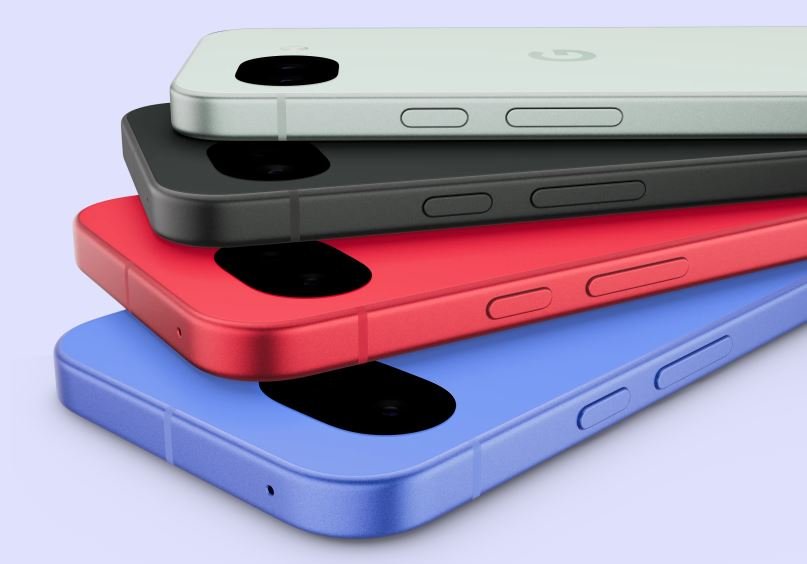
When searching for the Best Value Smartphones, five specific models dominate the conversation in 2026. Each targets a slightly different niche but shares the common goal of undercutting the big-name incumbents.
- The Google Pixel 10a: This is the undisputed king of computational photography. By using the same Tensor G5 chip found in the Pro models, the “a” series delivers the best still-image quality on the market for under $500. Its “Magic Editor” suite is now faster and more intuitive than ever.
- The Nothing Phone (3a): Nothing has moved from a “hype brand” to a value powerhouse. The (3a) offers a clean, bloatware-free version of Android and a unique “Glyph” interface that actually adds utility to your notifications. It’s the choice for those who value design and a refined software experience.
- The OnePlus Nord 5: OnePlus has returned to its roots. The Nord 5 features the fastest charging in its class and a 144Hz display that makes the UI feel smoother than an iPhone 17 Pro.
- The Xiaomi 16T: For the hardware purists, Xiaomi offers the highest raw specs for the price. With a Leica-tuned camera system and a massive 6,000mAh battery, it’s a powerhouse for content creators who don’t want to carry a power bank.
- The Motorola Edge 60 Neo: Motorola’s comeback is solidified by its “Ready For” platform, which turns the phone into a desktop computer when plugged into a monitor. It is the best value for students and remote workers.
The Role of AI in Best Value Smartphones
2026 is the year where Artificial Intelligence ceased to be a gimmick and became a core utility, and Best Value Smartphones are leading the charge in making these tools accessible. We are no longer talking about simple voice assistants; we are talking about local LLMs (Large Language Models) that can summarize meetings, draft emails in your personal voice, and translate live conversations in real-time without needing an internet connection.
Previously, these AI features required massive cloud-computing costs, which manufacturers passed on to consumers. However, the 2026 NPU (Neural Processing Unit) architecture in mid-range chips has become efficient enough to run “Small Language Models” (SLMs) locally. This means your data stays on your device, enhancing privacy while providing the same level of assistance as a $1,500 flagship. Whether it’s AI-driven battery optimization that adds three hours of screen-on time or “Generative Fill” in your photo gallery, value phones are now just as “smart” as their premium counterparts.
Display and Battery Standards in Best Value Smartphones
The visual experience of Best Value Smartphones has seen a massive upgrade thanks to the mass production of LTPO (Low-Temperature Polycrystalline Oxide) tech. This allows the screen to drop to 1Hz when you’re looking at a static image and jump to 120Hz when you’re scrolling. In 2026, this isn’t just a battery-saving feature; it’s a requirement for the “Fluid UI” standards that modern users expect.
Battery tech has also seen a breakthrough with “Silicon-Carbon” anodes becoming mainstream in the mid-range. This allows for thinner phones with higher capacities. A 5,500mAh battery is now the baseline for Best Value Smartphones, easily providing two days of moderate use. When combined with the AI-assisted power management mentioned earlier, “battery anxiety” has largely been eradicated from the value sector. You no longer have to pay $1,200 for a phone that can survive a long day of travel or intensive work.
Photography Capabilities of Best Value Smartphones
If you asked a tech expert two years ago, they would say the camera is where budget phones fail. In 2026, Best Value Smartphones have proven that theory wrong. While they may lack the 10x optical zoom of a “Ultra” flagship, they have perfected the 1x, 2x, and Ultrawide experience that covers 99% of user needs.
The secret lies in sensor-binning and AI-ISP (Image Signal Processing). By using large 50MP or 108MP main sensors, these phones can crop into the sensor to provide a “lossless” 2x or 3x zoom that looks indistinguishable from a dedicated telephoto lens in good lighting. For the “Night Mode” enthusiasts, the 2026 mid-range sensors have larger pixels that pull in more light than the flagships of 2023. Whether you are shooting 4K/60fps video for a digital news platform or capturing 3D “Spatial Photos” for a VR headset, the value tier no longer leaves you wanting for more.
Sustainability and Support for Best Value Smartphones
A significant reason to choose Best Value Smartphones in 2026 is the improved software support. In the past, buying a mid-range phone meant being abandoned by the manufacturer after one or two years of updates. Today, prompted by new EU and UK regulations, brands like Google and OnePlus are promising 5 to 7 years of security patches and 4 major Android OS upgrades for their mid-range lineups.
Sustainability has also moved to the forefront. These devices now feature higher percentages of ocean-bound plastics in their speakers and 100% recycled cobalt in their batteries. Many Best Value Smartphones in 2026 are also “User-Serviceable,” meaning you can buy a replacement screen or battery kit from the manufacturer and perform a repair at your kitchen table with standard tools. This longevity significantly lowers the “Total Cost of Ownership,” making a $500 phone that lasts 5 years a much better investment than a $1,000 phone that is difficult to fix.
Performance Benchmarks for Best Value Smartphones
When we look at the benchmarks, Best Value Smartphones in 2026 are achieving scores that were reserved for top-tier gaming rigs just a few years ago. On Geekbench 7, mid-range chips are regularly hitting multi-core scores that allow for seamless multitasking. You can have a professional editing app, a high-resolution map, and a 20-tab browser open simultaneously without the system killing background tasks.
For gamers, the “Value” segment is now the “Sweet Spot.” Thanks to improved thermal management (using larger vapor chambers) and the efficiency of 3nm process nodes, these phones can maintain 60fps in titles like Genshin Impact or Warzone Mobile for hours without thermal throttling. By 2026, the software optimization of Android “Game Modes” has reached a point where it can bypass the OS’s heavy lifting to give the GPU direct access to resources, providing a “console-like” experience on a device that costs less than a month’s rent in London.
Smart Buying Strategies for Best Value Smartphones

To get the most out of Best Value Smartphones, you need to know how and when to buy. In 2026, the retail price is just the starting point.
- The “Release-Minus-One” Strategy: When the Pixel 10a launches, the Pixel 9a becomes the ultimate bargain. In 2026, a one-year-old mid-range phone is still more powerful than most people need.
- Trade-In Portals: Manufacturers are desperate for your old devices to reclaim rare-earth metals. Even a cracked old phone can often net you a $150 credit toward a new value handset.
- The Refurbished Market: Back Market and Amazon Renewed have become the primary way for Gen Z to shop. A “Grade A” refurbished value phone can often be found for 30% less than its already-low MSRP.
- Timing the Sales: Avoid buying in September when the big flagships launch. Instead, look for the “Spring Refresh” cycles where many value brands launch their mid-year contenders with aggressive introductory pricing.
Conclusion: The Verdict on Best Value Smartphones
In conclusion, the era of “settling” for a cheaper phone is officially over. Best Value Smartphones in 2026 offer a sophisticated, powerful, and ethical alternative to the overpriced flagships of the past. Whether you are a digital content creator needing a high-quality camera, a professional requiring multi-day battery life, or a student looking for a durable and fast device, the mid-range market has a solution that respects both your needs and your wallet.
The choice is no longer about what you’re willing to give up, but what you’re willing to pay for. Why pay for a brand’s multi-billion dollar marketing budget when you can pay for the hardware that actually sits in your pocket? By choosing a value champion, you are not just saving money; you are participating in a more sustainable and competitive tech ecosystem. The “High Tech” future is here, and it’s finally affordable for everyone.
About the Author