
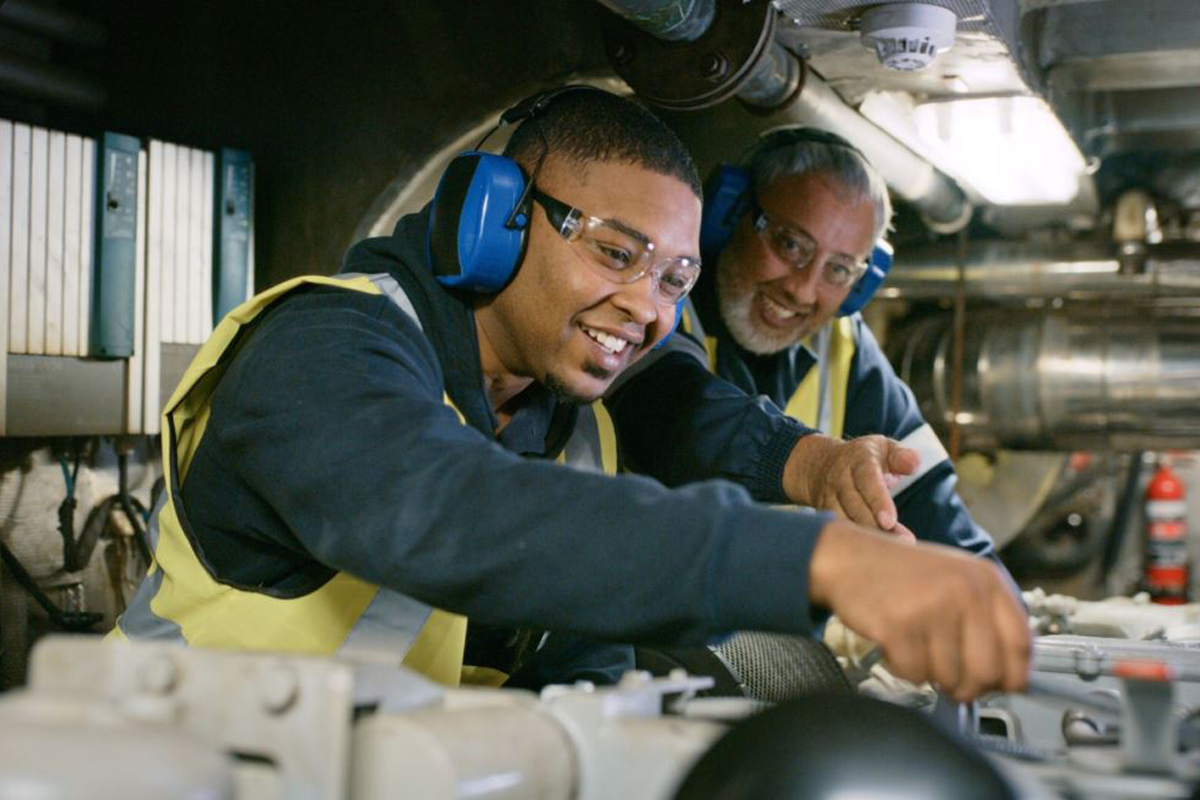
Trade schools are really popular these days. People are starting to think that going to a big name college is not the way to get a good job. For a time everyone thought you had to go to college to be successful.. Now in 2026 things are changing. The new generation, the Toolbelt Generation is doing things differently. They want to learn a trade and make money without owing a lot of debt. This is not something that is happening by chance.
It is because the economy is changing and there are many people looking for jobs that do not pay very well. Trade schools are a way for people to get ahead and be financially independent which’s something that going to a traditional college does not always provide. Trade schools are a way for the Toolbelt Generation to take control of their future and make a living.
The Economic Reality of Student Debt and Trade Schools
The most significant driver behind the move toward Trade Schools is the staggering cost of higher education. Ivy League and elite private universities now frequently cost upwards of $80,000 to $90,000 per year when tuition, room, and board are factored in. For many Gen Z students, graduating with nearly $400,000 in debt is no longer seen as an “investment,” but as a financial shackle. In contrast, vocational programs offer a path to the workforce that often costs a fraction of a single year’s tuition at a top-tier university.
Gen Z is a pragmatically minded generation, having witnessed the financial struggles of Millennials who entered the workforce with massive debt only to find themselves underemployed. By choosing Trade Schools, young professionals are entering the labor market at 19 or 20 years old, often with zero debt and a starting salary that rivals or exceeds that of liberal arts graduates. This financial head start allows them to invest in real estate, start businesses, and build wealth while their peers are still sitting in lecture halls.
Career Stability in the AI Era: Why Trade Schools Win
In a world increasingly dominated by artificial intelligence, the physical and specialized nature of the education provided by Trade Schools offers a level of job security that many office-based roles lack. While AI is exceptionally good at writing code, analyzing legal documents, and generating marketing copy, it cannot fix a burst pipe in a high-rise building, wire a complex electrical grid, or repair a jet engine. The “non-automatable” nature of skilled trades is a massive draw for a generation concerned about the future of work.
Trade Schools focus on skills that require high-level spatial reasoning, physical dexterity, and real-world problem-solving in unstructured environments—areas where AI currently struggles. As blue-collar industries become more technologically advanced, the “dirty” jobs of the past are becoming “smart” jobs. An HVAC technician today isn’t just using a wrench; they are using sophisticated diagnostic software and IoT sensors. This blend of manual expertise and technical literacy makes trade graduates incredibly resilient to the technological disruptions currently shaking the white-collar world.
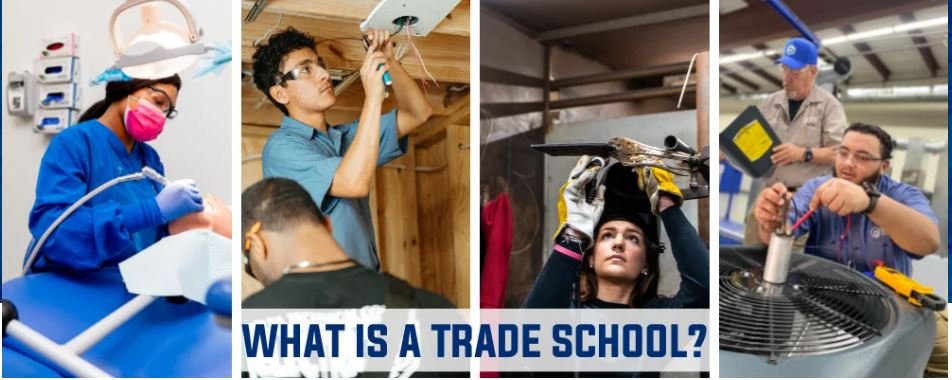
The Shrinking Prestige Gap and the Cultural Rebranding of Trade Schools
One of the most fascinating shifts in the Trade Schools narrative is the dissolution of the social stigma that once surrounded vocational training. For years, vocational paths were unfairly characterized as “backup plans” for those who couldn’t make it in “real” college. Today, that stigma is being replaced by a sense of “Blue-Collar Cool.” On platforms like TikTok and Instagram, young tradespeople are sharing their “day-in-the-life” content, showcasing six-figure salaries, beautiful custom-built homes, and the immense satisfaction of creating something tangible.
This cultural rebranding has made Trade Schools a badge of honor for Gen Z. They value authenticity and “the grind.” Seeing a 23-year-old master welder traveling the country or a female electrician leading a major infrastructure project inspires a sense of purpose that a corporate cubicle often lacks. The Ivy League degree, once the ultimate status symbol, is beginning to look more like a risky gamble, while a certification in a specialized trade is seen as a mark of savvy intelligence and independence.
Speed to Market: Accelerated Learning at Trade Schools vs. Universities
Time is a currency that Gen Z values highly, and the efficiency of Trade Schools is a major selling point. A traditional university degree requires a four-year commitment, with the first two years often spent on general education requirements that many students find irrelevant to their eventual career. In contrast, vocational programs are laser-focused. A student can complete a program in six months to two years, gaining direct, hands-on experience in their chosen field from day one.
The accelerated nature of Trade Schools allows students to enter the “high-earning” phase of their lives much sooner. While an Ivy League student is still taking “Introduction to Sociology” in their sophomore year, a trade student is already earning an apprentice wage, gaining seniority, and mastering a craft. This efficiency is particularly appealing to a generation that has grown up with on-demand information and a desire for immediate, measurable progress.
High Earning Potential and the “New Middle Class” of Trade Schools
There is a persistent myth that trade jobs are low-paying, but the data from Trade Schools graduates tells a very different story. Due to a massive shortage of skilled labor in the United States—often referred to as the “skills gap”—wages for electricians, plumbers, specialized welders, and aircraft mechanics have skyrocketed. In many regions, a master plumber or a specialized elevator technician can easily earn $150,000 to $200,000 per year, particularly if they venture into entrepreneurship.
Graduates of Trade Schools are the backbone of the “New Middle Class.” Because they have low or no debt, their “take-home” wealth is significantly higher than a white-collar professional earning the same gross salary but paying $2,000 a month in student loans. Furthermore, the trades offer a clear path to business ownership. It is much easier and more capital-efficient for an HVAC technician to start their own service company than it is for a mid-level corporate manager to start a competing consultancy. This path to self-employment is a major motivator for Gen Z’s entrepreneurial spirit.
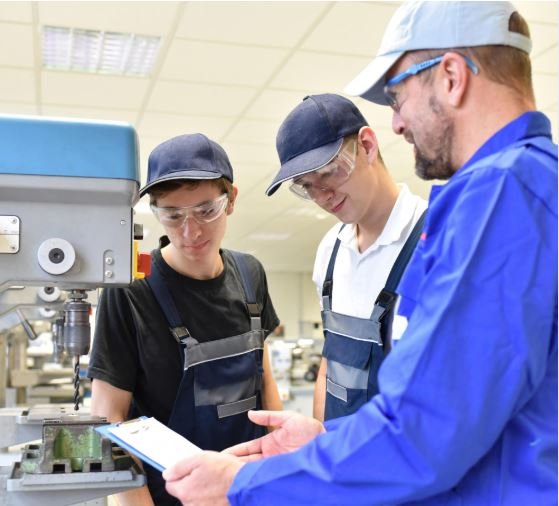
Sustainability and the Green Energy Revolution within Trade Schools
As the United States transitions toward a greener economy, Trade Schools have become the primary training ground for the “green-collar” workforce. The shift to renewable energy requires a massive influx of wind turbine technicians, solar panel installers, and electric vehicle (EV) infrastructure specialists. These aren’t just jobs; they are careers that align with Gen Z’s values regarding environmental sustainability and climate action.
By enrolling in Trade Schools, young people are positioning themselves at the forefront of the most critical infrastructure projects of the 21st century. Building the power grids of the future and retrofitting cities for energy efficiency requires the very skills taught in modern vocational programs. This sense of contributing to a larger global mission—while earning a high wage—is a powerful combination that an Ivy League degree in a theoretical field often cannot match.
Hands-On Fulfillment: The Psychological Benefit of Trade Schools
Beyond the financial and strategic advantages, the education provided by Trade Schools offers a unique psychological satisfaction that is often missing from “knowledge work.” There is a documented phenomenon known as “the joy of the build.” When a person completes a physical task—finishing a wiring project, repairing an engine, or completing a custom carpentry piece—the results are immediate and visible.
In contrast, many white-collar roles involve moving digital files around, attending endless meetings, and producing “outputs” that feel abstract or disconnected from reality. This can lead to burnout and a sense of purposelessness. Gen Z, a generation that values mental health and work-life balance, is finding that the “honest work” emphasized in Trade Schools provides a sense of accomplishment that carries over into their personal lives. They leave work at the site, having physically solved a problem, which allows for a cleaner mental break than the “always-on” nature of corporate emails.
The Verdict: Why Trade Schools are the Future of American Education
The shift toward Trade Schools is not a rejection of education, but a reimagining of it. It is a sign of a generation that is “optimizing” its life path. By choosing vocational training over Ivy League prestige, Gen Z is prioritizing financial freedom, job security in the face of AI, and the fulfillment of tangible work. The American economy is currently desperate for these skills, and those who answer the call are being rewarded with some of the most stable and lucrative careers available today.
As we look toward the 2030s, the prestige once reserved exclusively for the “Big Three” universities may well be shared with elite Trade Schools that produce the master craftspeople, engineers, and technicians who keep the world running. The “Toolbelt Generation” isn’t just fixing things; they are building a more practical, sustainable, and financially sound future for themselves.
About the Author