
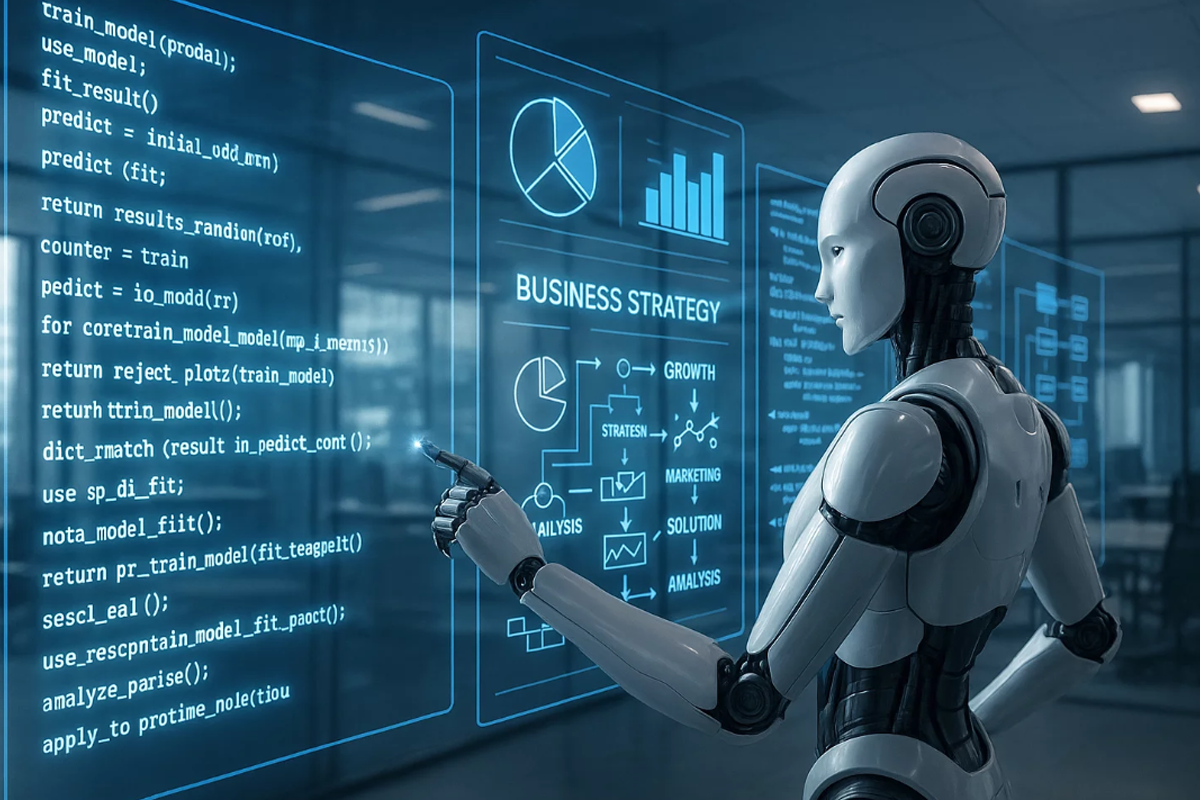
The way people work is changing a lot because of intelligence. This change is happening around the world and it is affecting everyone. People who work in all kinds of jobs are wondering if their careers are safe in the run.
As we go through 2026 artificial intelligence is no longer something we try out to see if it works. It is now a part of the way we do our jobs. AI is not a tool that we use sometimes. It is the way we work every day.
For people who create things, engineers and office workers it is very important to understand what is happening with artificial intelligence. If they do not understand this change they might lose their jobs.. If they do understand it they can become very important, to their companies and do very well. Artificial intelligence is changing the way we work and people need to know about it to be successful.
The Seismic Shift: How AI is Redefining Professional Landscapes
The rapid advancement of AI has created a paradox in the modern workplace. On one hand, productivity has soared to unprecedented levels. On the other, the “skills gap” has widened, leaving many veteran professionals feeling like digital immigrants in a world they once led. We are witnessing a transition from the Information Age to the Intelligence Age. In the previous era, knowing the answer was the primary value. Today, the value lies in knowing which questions to ask the machine.
This shift isn’t just about automation; it’s about augmentation. When we talk about artificial intelligence redefining jobs, we aren’t just talking about robots in factories. We are talking about algorithms that can write legal briefs, diagnose rare diseases, and even generate high-fidelity cinematic art. The barrier to entry for complex tasks has lowered, which means the “average” worker must now strive for “extraordinary” to maintain their competitive edge.
Vulnerability Mapping: Which Sectors Face the Most AI Disruption?
To understand if your career is safe, we must analyze which sectors are currently being absorbed by artificial intelligence capabilities. Historically, automation targeted “blue-collar” repetitive manual labor. However, the current wave of generative models targets “white-collar” cognitive labor.
- Data Entry and Basic Analysis: Any job that involves moving data from Point A to Point B is highly vulnerable. artificial intelligence can process millions of data points in seconds, making manual spreadsheet management a relic of the past.
- Junior-Level Programming: While senior architects are safe, entry-level coding—the “boilerplate” work—is now handled efficiently by artificial intelligence agents.
- Customer Support: With the rise of empathetic, multi-modal LLMs, basic customer service roles are being replaced by 24/7 digital assistants that never get tired or lose patience.
- Standardized Content Creation: Generic SEO writing or basic news reporting is now the domain of artificial intelligence . To survive here, one must provide deep investigative insights or a unique personal brand.
The Human Edge: Skills That AI Struggles to Master
Despite its processing power, artificial intelligence lacks several fundamental human traits that are essential for high-level business and social operations. To future-proof your career, you must lean into these “human-only” domains:
- Complex Emotional Intelligence (EQ): While a chatbot can simulate empathy, it cannot truly “feel” or navigate the subtle social dynamics of a boardroom or a sensitive HR negotiation.
- Strategic Ambiguity: artificial intelligence operates on logic and probability. It struggles with “black swan” events or making decisions based on incomplete, chaotic, or non-linear information where “gut feeling” and experience come into play.
- Physical Dexterity in Unstructured Environments: Roles like high-end surgery, specialized plumbing, or emergency response require a level of physical adaptability that current robotics—even those powered by artificial intelligence —cannot yet match in a cost-effective way.
- Authentic Creativity: artificial intelligence remixes existing data. It does not “invent” a new genre of music or a revolutionary philosophical concept. True innovation remains a human monopoly.
New Horizons: Career Paths Born from the AI Revolution
History shows that while technology destroys jobs, it creates new ones that were previously unimaginable. The artificial intelligence revolution is no different. We are seeing the emergence of entire industries centered around the maintenance and direction of these systems.
- Prompt Engineers and artificial intelligence Orchestrators: These are the new “middle managers” who act as the bridge between human intent and machine execution.
- artificial intelligence Ethics and Compliance Officers: As governments regulate the industry, companies need experts to ensure their artificial intelligence models aren’t biased, illegal, or hallucinating.
- Synthetic Media Curators: In a world flooded with generated content, the human “editor” or “curator” becomes more valuable than the “creator.” People will pay a premium for human-verified information.
- Human-Machine Teaming Trainers: Professionals who specialize in teaching traditional workforces how to integrate AI into their daily workflows without losing productivity.
Integration over Replacement: Making AI Your Ultimate Career Co-Pilot
The mantra for 2026 is simple: artificial intelligence won’t take your job, but a human using artificial intelligence might. The most successful professionals are those who treat these tools as a “co-pilot” rather than a threat.
Think of a digital content creator. Instead of spending six hours researching and two hours writing, they use artificial intelligence to research in ten minutes, allowing them to spend seven hours on deep-dive investigation and high-level strategy. This increases the quality of the output while maintaining the human “soul” of the work. To future-proof yourself, you must audit your current workflow and identify which 20% of your tasks provide 80% of your value. Automate the rest.
Constant Evolution: The Necessity of Lifelong Learning in the AI Era
In the past, you could get a degree and rely on that knowledge for 30 years. In the artificial intelligence era, the half-life of a skill is roughly five years. This means the most important skill you can possess is “meta-learning”—the ability to learn how to learn.
You must stay updated with the latest artificial intelligence model releases, plugins, and specialized tools relevant to your niche. Whether it’s learning how to use Midjourney for professional design or Rank Math’s AI features for SEO, staying stagnant is the only true career killer. Subscription-based learning and staying active in professional communities (like those on LinkedIn or specialized forums) are no longer optional.
Ethical Frontiers: Navigating the Moral Complexities of AI at Work
As we lean further into an AI-driven economy, we must address the ethical implications. There is a growing concern regarding data privacy, intellectual property, and the “devaluation” of human effort. Companies that prioritize ethical artificial intelligence usage—those that are transparent about when they use automation—tend to build more trust with their audience.
Furthermore, we must advocate for a “human-in-the-loop” philosophy. An artificial intelligence should never have the final say on a medical diagnosis, a legal judgment, or a hiring decision without a human expert reviewing the logic. If your career involves high-stakes decision-making, your role as the “moral anchor” for artificial intelligence output is a powerful way to ensure your job remains relevant.
The Verdict: Can You Truly Build an AI-Proof Career?
The short answer is yes, but it requires a radical shift in mindset. To be “AI-proof” is to be “AI-fluent.” It means moving away from being a “doer” of repetitive tasks and toward being a “director” of complex systems.
artificial intelligence is a mirror; it reflects our own capabilities back at us. If you provide generic value, you will be replaced by a generic algorithm. But if you provide unique, human-centric, and strategically complex value, artificial intelligence will only serve to amplify your reach and impact. The future belongs to those who can master the machine without losing their humanity.
Key Takeaways for Professionals in 2026:
- Embrace the Tool: Stop resisting and start experimenting.
- Niche Down: Deep expertise in a specific, complex field is harder for AI to replicate than general knowledge.
- Build Your Brand: People follow people. A strong personal brand and a “human” connection are your greatest defense against automation.
- Focus on Soft Skills: Leadership, negotiation, and empathy are the currencies of the future.
About the Author